Pipeline Forecasting Hygiene: Why Your Forecast Number Is Lying (And How to Fix It) | JayOh
→ the system is the problem

Pipeline Forecasting Hygiene: Why Your Forecast Number Is Lying (And How to Fix It)

It's not always a bad forecast — sometimes it's just a bad system. No exit criteria. No SLAs. No enforcement. And then you're down 20% QoQ with zero warning signs.

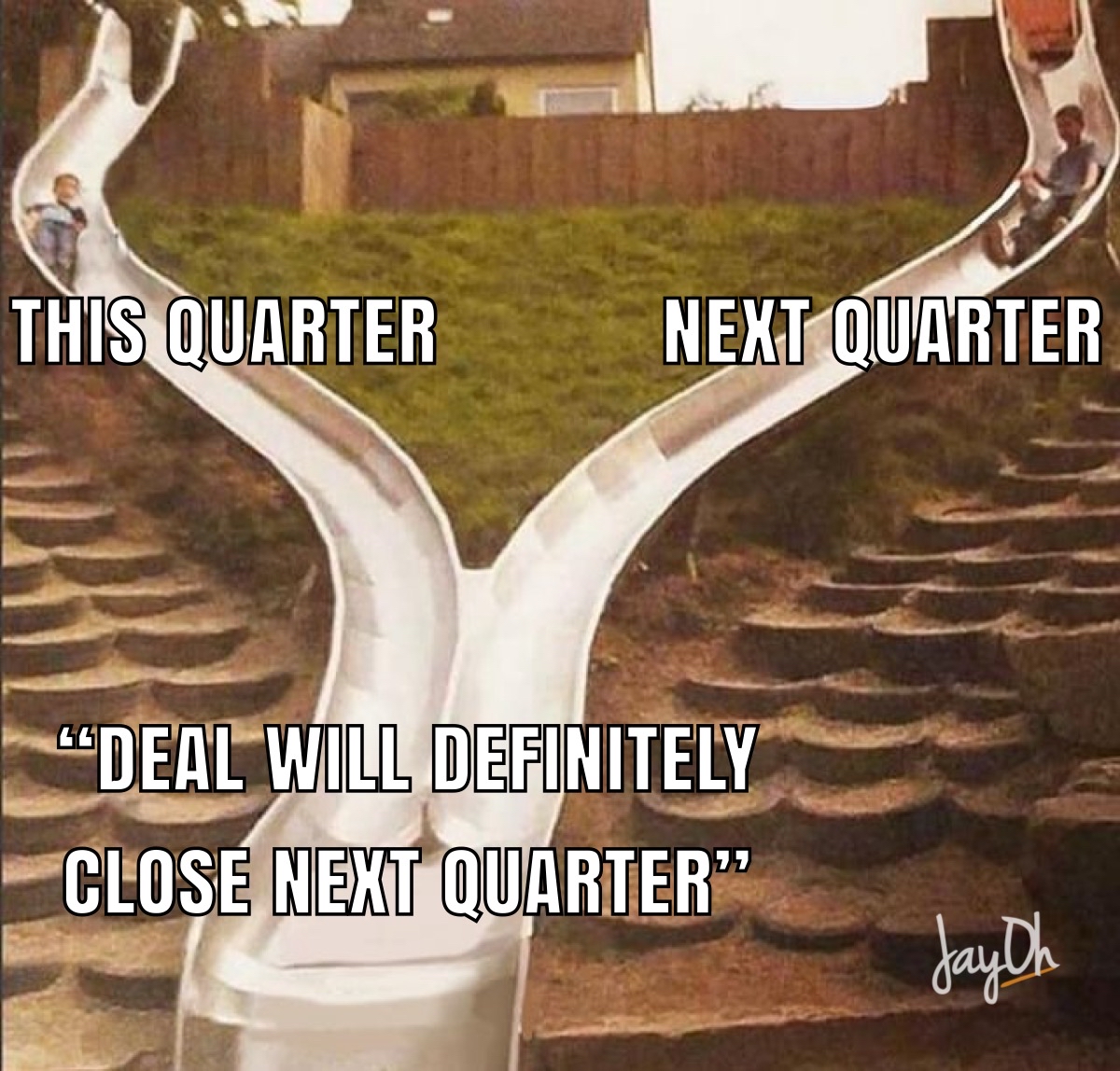
Pipeline forecasting illustration showing the gap between forecast and reality

How airtight is your forecasting system? Run the 2-minute audit.

Run the Pipeline Forecast Audit →
It's Not Always a Bad Forecast — Sometimes It's a Bad System

It's not always a bad forecast — sometimes it's just a bad system: - No exit criteria on stage progression - AEs gaming forecast to buy time - CRM pushing optimism over reality And then suddenly… you're down 20% QoQ with no warning signs. This is the GTM version of kicking the can downhill — until the bottom falls out. What we're seeing across RevOps audits: 👀 Stages without enforcement 🛑 No SLAs on "commit" 📉 Dashboards that show movement, not momentum Fix it once, and next quarter won't feel like a slide into surprise. @JayOh helps GTM teams close the gap between forecasts and reality.


What Pipeline Forecasting Hygiene Actually Means

Pipeline forecasting hygiene is the practice of enforcing structured stage criteria, deal-level accountability, and data discipline across every opportunity in your CRM pipeline. Poor pipeline forecasting hygiene leads to inflated pipeline numbers, missed quarterly targets, and boardroom surprises that erode executive trust and slow company growth.

Most teams treat forecasting as a reporting exercise — pull a number, present it, hope it lands. But forecasting is an operating system, not a spreadsheet ritual. When that system lacks enforcement, the number is fiction dressed as strategy.

Your Pipeline Forecasting Is Failing If:

  • More than 30% of "commit" deals slip to next quarter without documented reasons
  • Your stage progression has no required fields, no exit criteria, and no validation rules
  • AEs self-report forecast categories with zero manager override or accountability layer
  • Pipeline coverage ratio is below 2.5x and nobody flags it until week 8 of the quarter
  • Your forecast accuracy variance exceeds ±15% quarter over quarter
  • Dashboards show deal movement (stage changes) but not deal momentum (engagement velocity, next steps, multi-threading)

The root cause isn't lazy reps or bad data entry. It's a system design problem. When your CRM allows an AE to drag a deal from Discovery to Proposal with nothing more than a click, you've built a system that rewards optimism over rigor. The forecast becomes a reflection of hope, not evidence.

"Pipeline isn't a number. It's a system. And if your system has no guardrails, your number has no integrity."

Common Forecasting Failures: Issue → Cause → Fix

IssueRoot CauseFix
Commit deals slip 30%+No exit criteria between stagesImplement required fields + validation rules per stage gate
AEs sandbagging or inflatingNo accountability on forecast categoriesManager override layer + weekly deal review cadence
Late-quarter surprisesDashboards show movement, not momentumBuild engagement velocity + next-step tracking dashboards
Pipeline coverage always "fine"Weighted pipeline masks dead dealsImplement pipeline decay rules (age-out stale opportunities)
Forecast variance ±20%+No historical calibrationBuild stage-specific conversion rate benchmarks from last 4 quarters

The JayOh Forecast Integrity Framework

This is the system we deploy across every RevOps engagement to transform pipeline forecasting from guesswork to a predictable revenue engine. Five pillars, each enforced in the CRM and validated through cadence.

1. Stage Gate Enforcement

Every pipeline stage has documented exit criteria — required fields, activities, and evidence that must exist before a deal can progress. No more dragging deals forward on optimism. The CRM enforces it, not the manager. This is the foundation: if your stages aren't enforced, nothing downstream matters.

2. Forecast Category Accountability

Forecast categories (Pipeline, Best Case, Commit, Closed Won) have specific qualifying conditions, not just rep opinion. Commit means a verbal or written confirmation, a defined close date within the quarter, and an identified decision-maker. Manager overrides are logged with rationale. This creates a two-layer verification system.

3. Momentum Metrics (Not Movement Metrics)

Stop tracking stage changes as a proxy for progress. Instead, measure engagement velocity: email/meeting cadence, multi-threading depth, next-step completion rate, and days-in-stage against benchmarks. Deals that are "moving" but have gone silent for 14+ days get flagged automatically. Movement without momentum is pipe rot.

4. Pipeline Decay & Hygiene Automation

Opportunities that exceed stage-specific age thresholds trigger automated alerts and, eventually, automatic downgrade or removal. A deal sitting in "Negotiation" for 60 days with no activity isn't a deal — it's a wish. Automated decay rules keep the pipeline honest without depending on manual cleanup.

5. Calibration Loops

Historical conversion rates by stage, segment, rep, and deal size feed back into the forecast model. Instead of relying on gut feel, the system uses trailing 4-quarter data to weight each stage's contribution to the forecast. This closes the gap between "what reps say" and "what the math says" — and over time, they converge.

Key Pipeline Forecasting Metrics

These are the numbers that tell you whether your forecasting system is working — or just producing confident fiction.

Pipeline Coverage Ratio
Weighted Pipeline ÷ Quota
Target: 3x minimum. Below 2.5x = red flag by week 4.
Forecast Accuracy
Actual Closed ÷ Forecast Commit
Target: 90-110%. Variance >±15% = system failure.
Commit Slip Rate
Slipped Commit Deals ÷ Total Commit Deals
Target: <15%. Above 30% = exit criteria not enforced.
Pipeline Velocity
(# Opps × Win Rate × Avg Deal Size) ÷ Sales Cycle Days
Track QoQ trend. Declining velocity = pipe rot.

The math doesn't lie. When your commit slip rate is above 30% and your pipeline coverage is below 3x, you don't have a sales execution problem — you have a system design problem. Fix the system, and the numbers follow.

Pipeline Forecasting Maturity Model

Where does your organization sit? Most teams hover between Level 1 and 2, wondering why they can't hit forecast. The jump from Level 2 to Level 3 is where the ROI lives.

LevelNameCharacteristicsTypical Impact
1 Ad Hoc No stage definitions. Reps self-report everything. Forecasting = last week's pipeline + hope. ±30-50% forecast variance. Frequent surprises.
2 Defined Stages documented but not enforced. Forecast categories exist but rep discretion rules. Quarterly reviews catch issues too late. ±20-30% variance. Board trust eroding.
3 Enforced Stage gates have required fields. Commit SLAs active. Weekly deal reviews with manager overrides. Pipeline decay rules running. ±10-15% variance. Predictable quarters.
4 Calibrated Historical conversion rates feed forecast models. Momentum metrics (not just movement) tracked. Automated alerts on anomalies. ±5-10% variance. Data-driven confidence.
5 Predictive AI-assisted deal scoring. Real-time forecast adjustments. Self-correcting pipeline management. System continuously improves. <5% variance. Forecast = operating plan.

The Pipeline Forecasting Operating Cadence

A forecast isn't a one-time exercise. It's a system of recurring actions. Here's the cadence that keeps the machine honest.

CadenceActionOwner
DailyCRM auto-flags: stale deals (no activity 7+ days), deals past stage SLA, missing next stepsRevOps (automated)
WeeklyPipeline review: validate commit deals, review stage progression evidence, update forecast categories with manager overrideSales Manager + AEs
Bi-WeeklyForecast calibration call: compare rep forecast vs. model forecast, flag divergence, adjust weightingRevOps + Sales Leadership
MonthlyPipeline health report: coverage ratio trend, velocity trend, aging analysis, decay removals, net new vs. recycled pipeRevOps → CRO
QuarterlyFull forecast retrospective: accuracy vs. commit, conversion rate recalibration, process gap audit, SLA adjustmentsRevOps + CRO + CFO
AnnuallyForecasting model rebuild: update all benchmarks, refresh stage definitions, recalibrate scoring models, assess tool changesRevOps + Executive Team

Pipeline Forecasting Hygiene Audit

Check off what you have. Get a gap analysis with prioritized action items. Takes 2 minutes.

Stage Gate Enforcement

0 / 4
Each pipeline stage has documented, enforced exit criteria (required fields/activities)
Not just documented — actually enforced via CRM validation rules
CRM prevents deals from advancing without completing required evidence
Validation rules block stage changes when criteria are missing
A deal progression audit exists showing which deals skipped criteria
Tracks retroactive compliance, not just forward enforcement
Stage definitions are documented in an accessible sales playbook
Reps can reference clear criteria without asking their manager

Forecast Category Accountability

0 / 4
Forecast categories (Pipeline/Best Case/Commit) have specific qualifying conditions
Not just rep opinion — defined evidence requirements
Manager override layer exists on forecast submissions
Managers confirm or adjust with logged rationale
SLAs exist on commit deals (auto-flag if no activity within 10 days)
Prevents stale commits from inflating the forecast
Commit-to-close conversion rate tracked by rep
Used in 1:1s to calibrate rep-level forecasting accuracy

Momentum Metrics

0 / 4
Engagement velocity tracked (email/meeting cadence per deal)
Not just "last activity date" — actual interaction frequency
Multi-threading depth tracked (contacts engaged per opportunity)
Single-threaded deals close at 30-40% lower rates
Days-in-stage benchmarks set with auto-flags for overages
Deals exceeding stage time thresholds get flagged automatically
Next-step field required on every open opportunity
No next step = no forecast credit

Pipeline Decay & Hygiene

0 / 4
Automated decay rules remove/downgrade stale deals
Deals past age thresholds auto-downgrade without manual intervention
Pipeline aging report exists with stage-specific thresholds
Color-coded aging visible in weekly reviews
Net new vs. recycled pipeline tracked separately
If >40% is recycled, your top-of-funnel has a problem
Monthly pipeline scrub meeting focused on removal/disqualification
Dedicated time for killing dead deals, not just reviewing live ones

Calibration Loops

0 / 4
Historical stage conversion rates feed the forecast model
Trailing 4-quarter data used to weight each stage's contribution
Quarterly forecast retrospective compares predicted vs. actual
Analyzes what slipped, why, and recalibrates assumptions
Conversion rates segmented by deal size, segment, and rep tenure
Not all deals convert the same — segmented models are more accurate
Dual-forecast view exists (rep forecast vs. model forecast)
When they converge over time, your system is working
0
out of 20 controls in place

Category Breakdown

Prioritized Gap Analysis

These are the controls you're missing, ranked by impact. Start from the top.

Talk to JayOh About This

Most teams don't have a forecasting problem. They have a system enforcement problem — and every quarter without guardrails is another quarter of compounding revenue loss.

Ready to Fix Your Forecasting System?

JayOh helps GTM teams close the gap between forecasts and reality. Let's build the system.

Let's Talk →

Your Growth Partner
