It's dirty because you never built the system that keeps it clean. Here's the operating framework that fixes it permanently.
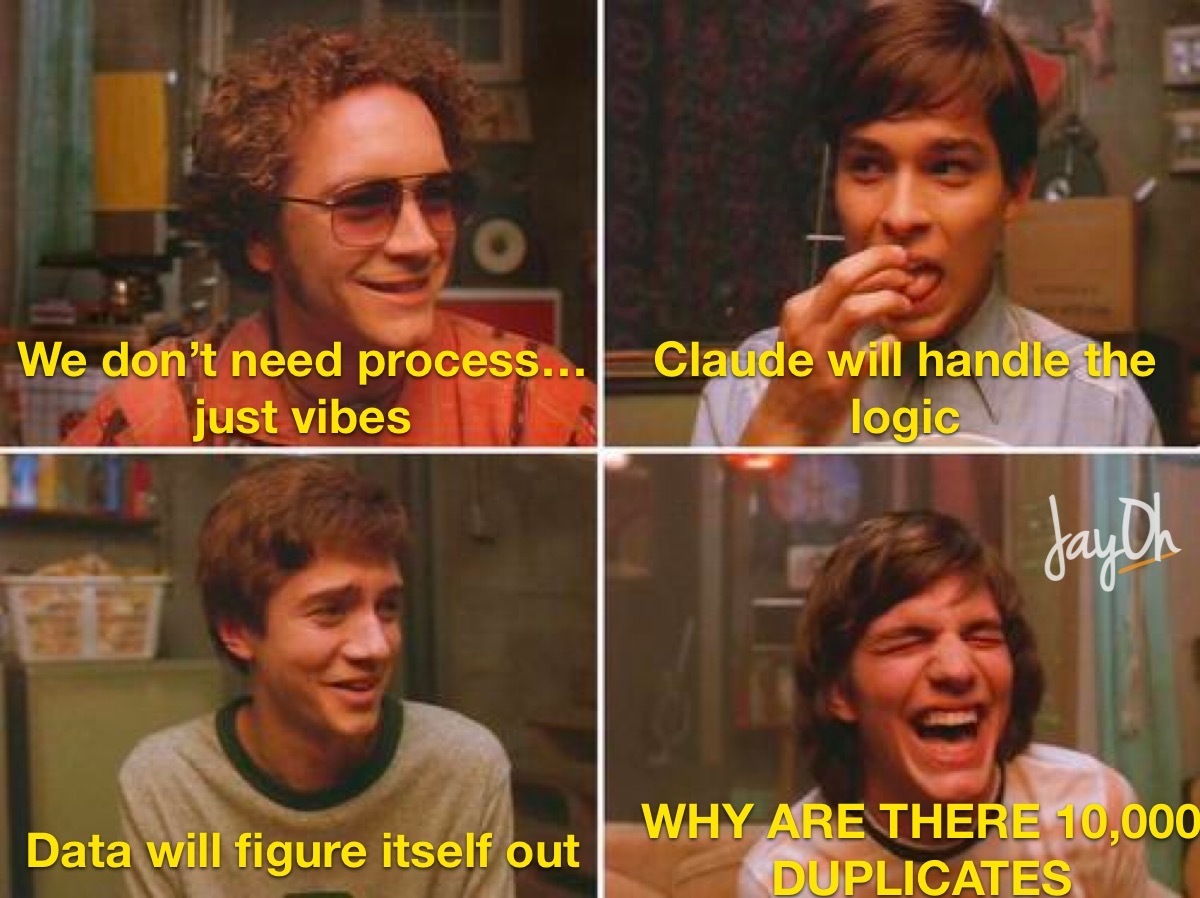
Your CRM isn't dirty because your reps are sloppy. It's dirty because you never built the system that keeps it clean. Every team we work with says the same thing: "We just need to do a cleanup." So they clean it. 90 days later it's a mess again. The duplicates are back. The stage fields mean three different things. Nobody owns the accounts. That's not a behavior problem. That's a design problem. Clean CRM requires field validation on the way in. It requires deduplication logic at the integration layer. It requires lifecycle definitions that actually match how deals move. And it requires someone owning it — not as a project, but as an ongoing system. When your data is unreliable, everything downstream breaks: pipeline is guesswork, attribution is fiction, and forecasts are aspirational at best. Fix the intake. Fix the ownership. Fix the logic. The data will follow. #RevOps #CRMHygiene #DataQuality #GTM #OperatorMindset
Most companies treat CRM data quality as a discipline issue. Reps aren't logging activities. Managers aren't enforcing standards. Marketing isn't maintaining their lists. And so the cycle repeats: leadership mandates a "data cleanup," the ops team grinds through it for two weeks, things look good for a quarter, and then entropy wins again.
Think about it like a highway system. If you build roads with no lane markers, no speed limits, and no on-ramps — and then blame drivers for the chaos — you're solving the wrong problem. CRM architecture works the same way. The system itself has to enforce the standards you want.
Required fields, picklist standardization, conditional logic on forms, duplicate detection at point of creation. If bad data can enter your CRM, it will — at scale. Build validation rules that prevent garbage from ever hitting the database.
Every integration is a potential data contamination vector. Your marketing platform, enrichment tools, webforms, and imports all need deduplication and normalization logic before records land in the CRM. This is where most orgs hemorrhage data quality.
When your deal stages, lead statuses, and lifecycle definitions don't reflect how your business actually operates, reps game the system or ignore it entirely. Map your stages to observable buyer behaviors, not internal aspirations.
CRM hygiene isn't a Q4 initiative. It's a continuously monitored system with dashboards, automated alerts on data decay, and a named owner who's accountable for data quality as an operational metric — not a side task.
Where does your organization fall? This framework maps the five levels of CRM data quality maturity — from reactive chaos to self-healing systems.
| Level | Name | Validation | Deduplication | Lifecycle | Ownership |
|---|---|---|---|---|---|
| L1 | Chaotic | No required fields. Free-text everything. | None. Duplicates multiply unchecked. | Stages are arbitrary or unused. | Nobody owns it. |
| L2 | Reactive | Some required fields, rarely enforced. | Manual dedup quarterly. | Stages exist but don't match reality. | Ops person cleans when it's bad. |
| L3 | Structured | Validation rules on key objects. | Basic auto-merge on email. | Stages map loosely to sales process. | RevOps owns with monthly audits. |
| L4 | Optimized | Conditional logic across all intake points. | Real-time dedup at integration layer. | Stages tied to buyer-observable actions. | Data quality dashboard + weekly review. |
| L5 | Self-Healing | AI-assisted enrichment + validation. | Automated merge with confidence scoring. | Dynamic stages that adapt to deal signals. | Automated alerts + SLA on data quality. |
JayOh engineers the systems that keep your data clean, your pipeline real, and your revenue predictable.
Let's Talk